Watercolor Mountains: A Guide to High-Quality Digital Art for Your Projects
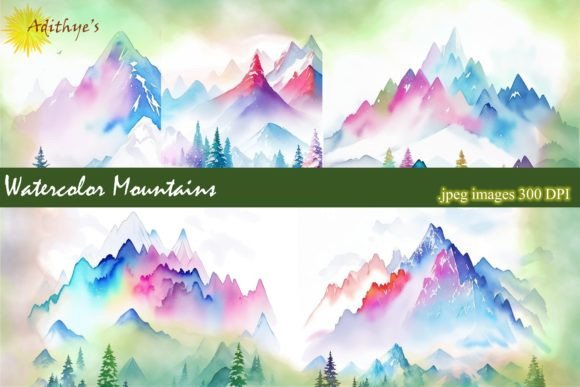
There is a distinct charm in the soft, fluid gradients of watercolor art that digital vectors often struggle to replicate. When you are looking for Watercolor Mountains, you are likely seeking that organic texture and emotional depth to elevate a design project. Whether you are an entrepreneur launching a print-on-demand store or a hobbyist creating personalized scrapbook pages, the quality of your source images dictates the final outcome. However, many creators make the critical mistake of assuming all "high-resolution" downloads are created equal, leading to pixelated prints, muddy colors, and wasted time.
The Reality of Resolution and File Specifications
One of the most common misunderstandings in digital asset purchasing is confusing file size with image dimensions. You might see a download labeled as "large" only to find it is merely 300 pixels wide, which looks fine on a screen but disintegrates when printed. True professional-grade Watercolor Mountains assets must meet specific technical criteria to ensure versatility. The standard you should look for includes files that vary anywhere above 4000 pixels in width or height and maintain a resolution of 300 dpi (dots per inch).
Why does this matter? If you attempt to stretch a low-resolution image to fit a t-shirt design or a large notebook cover, the result will be jagged and unprofessional. This directly impacts your brand's credibility. By choosing assets with dimensions exceeding 4000 pixels, you guarantee that the artwork remains crisp whether it is printed on a small greeting card or scaled up for a wall poster. Always verify the DPI setting; 72 dpi is standard for web use, but 300 dpi is non-negotiable for physical products like gift cards and invitations.
Choosing the Right Format for Your Workflow
Another area where creators often stumble is file format compatibility. While some designers prefer layered PSD files for maximum editing control, many projects require a simpler, universally compatible solution. The .jpeg format included in high-quality Watercolor Mountains collections offers a balance between quality and ease of use. JPEGs are supported by almost every design software, from industry-standard Adobe Creative Cloud tools to beginner-friendly apps like Canva or GIMP.
A frequent error is downloading images with complex transparency requirements without checking if the background is suitable for your specific project. With watercolor art, the edges can sometimes be faint. If you plan to use these images for t-shirt designs or notebook covers, ensure the background is either transparent or easily removable. In the case of the product described here, the images are provided in a convenient Zip folder, ensuring they remain compressed during transfer but expand fully upon extraction, preserving their original quality.
Common Pitfalls in Print-on-Demand and Crafts
For those venturing into print-on-demand (POD) products, the stakes are higher. A blurry mountain range on a mug or a tote bag is a guaranteed return or refund. Many beginners underestimate the importance of color profiles. Watercolor paintings often rely on subtle shifts in hue that can get lost if the file is not saved correctly. Before applying your Watercolor Mountains to a product mockup, always check how the colors translate from RGB (screen) to CMYK (print).
Consider a scenario where you are designing a set of wedding invitations. You select a beautiful mountain scene, but because the file was low resolution, the text overlay becomes hard to read against the grainy background. This affects communication and presentation, potentially ruining a client's special day. To avoid this, preview your design at 100% zoom before finalizing. If the edges of the mountains look fuzzy or blocky, the file is not suitable for print. Stick to resources that explicitly state a resolution of 300 dpi and dimensions over 4000 pixels to ensure your vision translates perfectly to paper.
Maximizing Value with a Curated Collection
Efficiency is key for freelancers and small business owners who juggle multiple projects. Instead of hunting for individual images across various stock sites, investing in a curated collection is a smarter approach. A set containing 5 images provides enough variety to create a cohesive theme without overwhelming your workflow. These five pieces can serve as a complete palette for a line of greeting cards, a series of scrapbooking layouts, or a seasonal collection of gift cards.
The versatility of such a collection cannot be overstated. You can use one image for a bold statement on a notebook cover and another as a delicate background for a business card. By having multiple variations within the same style, you maintain visual consistency across different marketing materials. This saves hours of searching and ensures that your brand identity remains unified. Remember, the goal is not just to have art, but to have art that works seamlessly across your entire product ecosystem.
Practical Steps Before You Download and Create
To ensure you get the best results from your purchase, follow these practical steps before diving into your design software:
- Verify the Dimensions: Open the extracted JPEGs and check the properties. Confirm that the longest side is indeed above 4000 pixels. This is your safety net against pixelation.
- Test Print a Sample: If possible, print a small section of the image on standard paper first. This reveals any color discrepancies or compression artifacts that might not be visible on a monitor.
- Organize Your Assets: Since the files come in a Zip folder, extract them immediately into a dedicated project folder. Rename the files clearly (e.g., "Mountain_01_HighRes.jpg") to keep your workflow organized, especially if you are collaborating with others.
- Check Licensing: Ensure the license allows for commercial use if you plan to sell items like t-shirts or notebooks. Most high-quality digital downloads include this, but it is always worth double-checking to avoid legal issues later.
Elevating Your Projects with Confidence
Using Watercolor Mountains effectively is about more than just aesthetics; it is about understanding the technical requirements that make art functional. By avoiding the trap of low-resolution downloads and paying attention to file formats, you protect your time and reputation. Whether you are crafting a handmade invitation or scaling a POD business, the difference between a mediocre product and a standout piece often lies in the quality of the digital assets you choose.
This collection, featuring 5 high-definition images in .jpeg format, is designed specifically to remove those barriers. It offers the clarity needed for large-scale printing and the flexibility required for diverse creative applications. From scrapbooking enthusiasts to professional marketers, the right tools empower you to focus on creativity rather than troubleshooting technical glitches. Thank you for considering this resource for your next project; may your designs be as majestic and clear as the mountains themselves.